
As Amazon Associates, we earn from qualifying purchases. This means we may receive a small commission at no extra cost to you if you click through and make a purchase.
As an Amazon Associate we earn from qualifying purchases. Links on this page are affiliate links.
Finding the best fishing drones under $300 requires looking at hard specs. We compared 2 models based on published listing data. The DJI Mini 4K Drone with 3-Axis Gimbal leads because its 8.47-ounce weight and 3-axis gimbal offer reliable stabilization. This makes it ideal for beginners seeking easy 4K footage. You need gear that stays stable in wind. This guide helps you decide which drone fits your needs. We focus on weight, camera resolution, and flight features. These specs determine how well your drone performs over water.
Check weight for regulatory ease
Both listed drones weigh under 250 grams. This 8.47-ounce and 8.8-ounce difference keeps them in the same regulatory class. You avoid complex registration requirements. This simplifies setup for beginners. Choose based on camera stabilization needs rather than legal hurdles. The lighter option offers slightly easier transport while maintaining similar flight performance.
| # | Product | Best for | Price |
|---|---|---|---|
| 1 | DJI Mini 4K Drone with 3-Axis Gimbal Best overall | beginners seeking easy 4K stabilization | |
| 2 | Potensic ATOM SE 4K EIS Drone Best beginners | Beginners seeking long flight time |
The best fit for you
- You want the most compact model on the list – DJI Mini 4K Drone with 3-Axis Gimbal – It weighs 8.47 ounces and measures 7.87 inches long.
- You need reliable 4K video stabilization for smooth footage – DJI Mini 4K Drone with 3-Axis Gimbal – It includes a 3-axis gimbal with a 4K camera.
- You prefer a drone with a foldable design for travel – Potensic ATOM SE 4K EIS Drone – The Potensic ATOM SE features a foldable design.
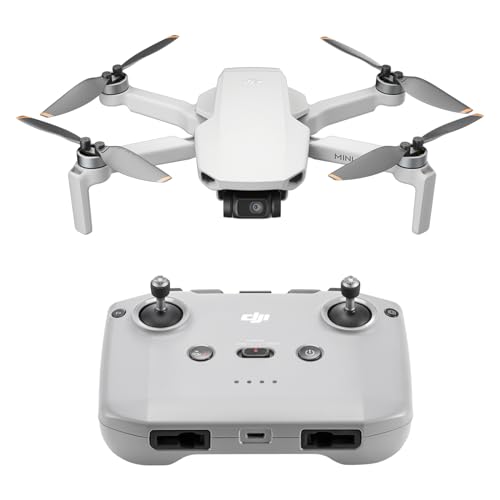
DJI Mini 4K Drone with 3-Axis Gimbal
Best for: beginners seeking easy 4K stabilization
- Flight Time
- 31-Min
- Control Range
- 10km
- Camera Resolution
- 4K
- Aircraft Weight
- Under 249 g
- Features
- Auto Return
- Camera
- 4K Camera
The DJI Mini 4K is a compact drone weighing under 249 grams, meaning you do not need FAA registration for recreational use. It captures 4K UHD video stabilized by a 3-axis gimbal and maintains a connection up to 10 km away. With a single battery, you get 31 minutes of flight time. This model suits beginners who want stable, cinematic footage without complex setup requirements.
- 4K UHD camera resolution for clear video
- 3-axis gimbal ensures stabilized footage
- 10 km video transmission range
- Under 249 g weight avoids registration
- Level 5 wind resistance for stability
- 31-minute flight time is shorter than the 62-minute competitor
- Included RC-N1C controller requires your smartphone for operation
- You want a drone that does not require FAA registration
- You need stable 4K footage with a 3-axis gimbal
- You prefer a lightweight aircraft under 249 grams
- You need more than 31 minutes of continuous flight per battery
- You want a dedicated remote with a built-in screen
- You require a drone heavier than 249 grams for different regulations
Verdict: The DJI Mini 4K Drone Under 249g offers reliable 4K stabilization and a long control range for beginners. It fits you best if you prioritize easy setup and regulatory simplicity over extended flight duration.

Potensic ATOM SE 4K EIS Drone
Best for: Beginners seeking long flight time
- Flight Time
- 62 minutes
- Camera Resolution
- 4K
- Aircraft Weight
- Under 249g
- Use
- Beginners
- Features
- GPS, Auto Return, Brushless Motor
- Camera
- 4K Camera
The Potensic ATOM SE is a lightweight drone weighing under 249 grams, which means you do not need FAA registration. It features a 4K camera with a Sony sensor and offers 62 minutes of total flight time across two batteries. The brushless motors provide level-5 wind resistance for stable footage. This model includes GPS auto-return and multiple flight modes, making it a practical option for beginners who want reliable performance without complex setup.
- 62 minutes of total flight time with two included batteries
- Under 249g weight avoids FAA registration requirements
- Level-5 wind resistance with brushless motors
- 4K video recording with Sony sensor
- Camera uses EIS instead of a 3-axis gimbal
- Maximum speed of 16m/s is lower than some competitors
- You want a drone that does not require registration
- You need extended flight time for longer sessions
- You are a beginner looking for stable GPS features
- You require a mechanical gimbal for maximum stability
- You need the highest possible speed for sports mode
- You prefer a drone with a larger sensor size
Verdict: Potensic ATOM SE 4K GPS Drone is a solid entry-level choice for users who prioritize flight time and regulatory ease over mechanical stabilization.
Specifications side by side
| Spec | DJI Mini 4K Drone with 3-Axis Gimbal | Potensic ATOM SE 4K EIS Drone |
|---|---|---|
| Flight Time | 31-Min | 62 minutes |
| Control Range | 10km | – |
| Camera Resolution | 4K | 4K |
| Aircraft Weight | Under 249 g | Under 249g |
| Use | – | Beginners |
| Features | Auto Return | GPS, Auto Return, Brushless Motor |
| Motor Type | – | Brushless |
| Camera | 4K Camera | 4K Camera |
| Design | – | Foldable |
| Dimensions | 7.87 × 6.29 × 2.16 inches | 5.63 × 3.46 × 2.28 inches |
| Weight | 8.47 ounces | 8.8 ounces |
| Color | Gray | Gray |
| Model | MT2SD | DSDR04B |
| Size | – | 11.81 x 9.64 x 2.28 inches |
How to Choose the Right Drone
Check camera stabilization type
You need smooth video to spot fish and structure. The DJI Mini 4K includes a 3-axis gimbal for mechanical stabilization. This hardware isolates the camera from drone movement. The Potensic ATOM SE uses Electronic Image Stabilization instead. EIS relies on software to reduce shake. Mechanical gimbals generally provide better results in windy conditions. Choose the DJI if you prioritize footage quality. Pick the Potensic if you accept software stabilization for a lower cost.
Review motor construction details
Motor type affects durability and maintenance. The Potensic ATOM SE features brushless motors. Brushless designs last longer and require less upkeep than brushed alternatives. The DJI Mini 4K listing does not specify motor type in the provided data. You should verify this detail on the official product page if motor longevity is critical. Brushless motors offer consistent power delivery. This helps maintain stable flight during fishing operations. Check the full spec sheet to confirm this feature for the DJI model.
Compare physical dimensions carefully
Size impacts portability and storage. The Potensic ATOM SE is a foldable design. Its folded dimensions are 5.63 by 3.46 by 2.28 inches. This compact shape fits easily into tackle bags. The DJI Mini 4K measures 7.87 by 6.29 by 2.16 inches. It is not listed as foldable in the data. You should choose the Potensic if you need maximum portability. The DJI offers a slightly different form factor. Consider your storage space when deciding between these two sizes.
Verify weight for regulations
Both drones weigh under 250 grams. The DJI Mini 4K is 8.47 ounces. The Potensic ATOM SE is 8.8 ounces. This weight class simplifies regulatory requirements in many regions. You avoid complex registration processes with either model. The difference in weight is minimal. It does not significantly affect flight performance. You can focus on other features like camera quality. Both models offer easy setup for beginners due to their light weight. This makes them suitable for casual fishing trips.
Look for auto return features
Auto Return is a critical safety feature. Both the DJI Mini 4K and Potensic ATOM SE include this function. It returns the drone to its takeoff point if the signal is lost. This protects your investment during fishing sessions. You can focus on spotting fish without worrying about losing control. The DJI also lists this feature explicitly. The Potensic includes GPS for accurate positioning. This combination ensures reliable return behavior. Always verify this feature is active before launching your drone.
Frequently asked questions
Can I use a sub-250g drone for fishing?
Yes, you can use drones under 250 grams for fishing. Both models on this list weigh less than 250 grams. The DJI Mini 4K weighs 8.47 ounces. The Potensic ATOM SE weighs 8.8 ounces. This weight keeps them in a simpler regulatory class. You avoid complex registration requirements. This makes setup easier for beginners.
Which drone offers better video stabilization?
The DJI Mini 4K offers better stabilization. It includes a 3-axis gimbal. This hardware isolates the camera from drone movement. You get smooth 4K footage. The Potensic ATOM SE uses Electronic Image Stabilization. It lacks a mechanical gimbal. Choose the DJI model if you prioritize smooth video. Pick the Potensic if you want a lower entry point.
Is the DJI Mini 4K foldable?
The provided data does not state that the DJI Mini 4K is foldable. Its listed dimensions are 7.87 inches long and 6.29 inches wide. The Potensic ATOM SE is explicitly listed as foldable. If portability is your main concern, the Potensic model is the clear choice. Check the product packaging for the DJI model to confirm its folding mechanism.
What camera resolution do these drones have?
Both drones capture 4K video. The DJI Mini 4K features a 4K camera with a 3-axis gimbal. The Potensic ATOM SE also includes a 4K camera. It uses Electronic Image Stabilization instead of a mechanical gimbal. Both models provide high-resolution footage. This allows you to spot fish and structure from the air clearly.
Do these drones have GPS and auto return?
The Potensic ATOM SE includes GPS and Auto Return features. The DJI Mini 4K also lists Auto Return as a feature. GPS helps maintain position and return to home. Auto Return brings the drone back if signal is lost. These safety features are useful for fishing over water. They help prevent loss of the device.
Which drone is better for beginners?
The Potensic ATOM SE is labeled as best for beginners. It offers long flight time and easy setup. The DJI Mini 4K is also good for beginners due to its weight. It weighs under 250 grams. This simplifies regulatory hurdles. Choose the Potensic for flight time. Choose the DJI for stabilization ease.


