
As Amazon Associates, we earn from qualifying purchases. This means we may receive a small commission at no extra cost to you if you click through and make a purchase.
Choosing audio gear for a computer setup can feel overwhelming, especially for gift-givers or first-time buyers trying to understand what sets different desktop systems apart. When looking at steel series speakers, the main decision revolves around how sound is distributed across the room: a compact pair of desktop units sitting beside a monitor, a three-piece system with an added floor-standing bass unit, or a complete multi-speaker surround layout that places sound behind the chair. Audio jargon like channels and subwoofers often creates unnecessary confusion. In practical terms, each configuration simply balances desk space against how fully the sound envelops the listener during games, movies, and music.
The SteelSeries gaming speaker lineup is structured around a clear three-tier progression under the Arena banner. Each consecutive tier builds upon the last by adding dedicated audio hardware, expanding connection types, and introducing more immersive audio channels. The entry-level model offers clean two-channel stereo sound housed entirely on the desktop, while the step-up version adds two-way acoustic drivers, reactive ambient lighting, and a dedicated low-frequency bass module. At the top of the range, the flagship model introduces a complete five-channel surround sound system featuring wireless rear speakers and a standalone display pod. Navigating a steelseries speakers comparison shows that while all three models share universal features like Bluetooth wireless streaming and wired headset integration, their physical dimensions cater to distinctly different room arrangements.
SteelSeries Gaming Speakers Lineup at a Glance
| Model | Audio Channels | Driver Architecture | Connections | Standout Feature |
|---|---|---|---|---|
| SteelSeries Arena 3 | 2.0 Stereo | 4-inch organic fiber cone with front bass port | PC wired, 3.5 mm Aux, Bluetooth, headset port | Adjustable tilt stands and on-speaker controls |
| SteelSeries Arena 7 | 2.1 Surround output | 2-way silk dome tweeters, woofers, 6.5-inch subwoofer | USB, 3.5 mm Aux, Optical, Bluetooth, headset port | Reactive 4-zone PrismSync RGB lighting |
| SteelSeries Arena 9 | 5.1 Surround output | 2-way front and rear drivers, center speaker, 6.5-inch subwoofer | USB, 3.5 mm Aux, Optical, Bluetooth, headset port | Wireless rear speakers and OLED control pod |
Figures as published on the product listings.
The Models in Detail
SteelSeries Arena 3 2.0 Desktop Gaming
- Best for Compact desks wanting simple stereo sound
- Size 1
- Color Black
- Dimensions 7.72 x 4.13 x 4.97 inches
Our score: 8.2/10
Pros
- Compact 2.0 desktop footprint
- Four-inch organic fiber drivers
- Adjustable tilt stands
- Built-in wired headset port
Cons
- No standalone subwoofer
- Lacks optical connection
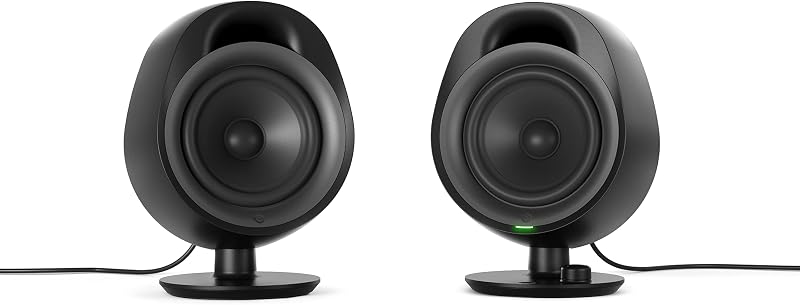
The SteelSeries Arena 3 2.0 Desktop Gaming system serves as the foundational two-channel setup in the brand’s desktop catalog. Built around two tabletop speakers, this system relies on massive four-inch drivers crafted from an organic fiber cone to handle the audio spectrum, delivering clean highs, vibrant mids, and punchy lows. To aid bass performance without requiring an external cabinet, each speaker incorporates a front-firing acoustic bass port that directs low-end resonance toward the listener. The physical units sit on built-in adjustable tilt stands, allowing users to angle the sound upward toward their ears for proper acoustic alignment. Unlike studio reference hardware such as traditional mackie studio monitors that require balanced audio interfaces, this unit relies on straightforward consumer connections including standard PC wired inputs, a 3.5 mm auxiliary port, and Bluetooth for streaming music directly from phones and tablets.
Everyday convenience is central to the design of the steelseries arena 3, featuring touch-sensitive volume controls and a multi-function button located directly on the speaker cabinet. This single interface allows users to adjust volume, mute audio output, pair wireless Bluetooth devices, and toggle audio pass-through to a plugged-in wired headset without reaching behind a computer tower. Software customization is handled through the downloadable SteelSeries Sonar audio suite on PC, granting access to a 10-band parametric equalizer and spatial audio processing to simulate multi-directional surround effects through a standard two-channel stereo pair. The listing notes that the speaker enclosure material is not available, and the units carry a non-waterproof rating alongside a tabletop mounting design.
This entry-level setup is ideal for students, apartment dwellers, and gamers with smaller workspaces who want elevated desktop sound without sacrificing floor real estate to a separate subwoofer box. It offers immediate plug-and-play simplicity and clear vocal reproduction for everyday gaming and media. However, when examining steelseries arena 3 vs arena 7, listeners seeking deep, floor-shaking sub-bass notes or integrated visual lighting will want to consider the next tier up, as the Arena 3 gives way to the Arena 7 once dedicated low-frequency hardware and illuminated aesthetics become priorities.
SteelSeries Arena 7 RGB Illuminated 2.1
- Best for Gamers seeking deep bass and lighting
- Size 1
- Color Black
- Dimensions 7.72 x 4.13 x 4.97 inches

Our score: 9.6/10
Pros
- Dedicated 6.5-inch subwoofer
- Two-way driver design
- Reactive PrismSync RGB lighting
- Optical and USB connectivity
Cons
- Subwoofer requires floor space
- Lacks physical rear channels
Stepping up into multi-driver acoustic territory, the SteelSeries Arena 7 RGB Illuminated 2.1 transforms the desktop experience by pairing two redesigned satellite speakers with a powerful standalone subwoofer. Rather than asking a single four-inch cone to reproduce every sound frequency, the Arena 7 introduces a true two-way speaker architecture. Each desktop satellite houses an independent silk dome tweeter dedicated exclusively to high-frequency detail and an organic-fiber woofer that handles mid-range tones. Low-end reproduction is offloaded to a substantial 6.5-inch downward-firing subwoofer designed to rest on the floor, producing deep bass vibrations that desktop drivers cannot physically duplicate. The listing also notes that the satellites offer wall-mount capability, giving users flexibility when arranging their workspace around an ultrawide display such as a sceptre e series monitor desk setup.
Visual presentation is another major upgrade on this model through the inclusion of SteelSeries Reactive PrismSync lighting. The desktop satellites incorporate ambient four-zone RGB light rings that project illumination across the desk surface and onto rear wall surfaces, reacting dynamically to in-game explosions and music tracks. Connectivity expands substantially beyond the basic stereo model, offering digital USB audio for PC and PlayStation consoles, an optical digital audio input, a 3.5 mm auxiliary connection, and Bluetooth pairing with an operating range of up to 5 meters. On-speaker controls provide tactile adjustments, while the Sonar software suite introduces acoustic echo cancellation alongside its 10-band parametric equalizer and spatial audio processing tools.
For shoppers trying to determine which steelseries speakers to buy, the Arena 7 hits the sweet spot for passionate PC and console gamers who want visceral explosions, rich soundtracks, and immersive lighting without the hassle of running speaker wires behind their seating area. These steelseries pc gaming speakers deliver the substantial physical impact of low-end frequencies that action titles demand. Still, for home entertainment enthusiasts who crave physical audio cues originating from behind their head rather than simulated software spatialization, the Arena 7 gives way to the full five-channel architecture found on the top-tier Arena 9.
SteelSeries Arena 9 Illuminated 5.1 Desktop
- Best for Enthusiasts demanding true surround sound immersion
- Size 1
- Color Black
- Weight 33.2 pounds
- Dimensions 4.97 x 4.13 x 7.72 Inches
Our score: 9.6/10
Pros
- True 5.1 physical surround sound
- Wireless rear satellite speakers
- OLED desktop Control Pod
- Dedicated center dialogue channel
Cons
- Largest desktop footprint
- Requires space for rear units
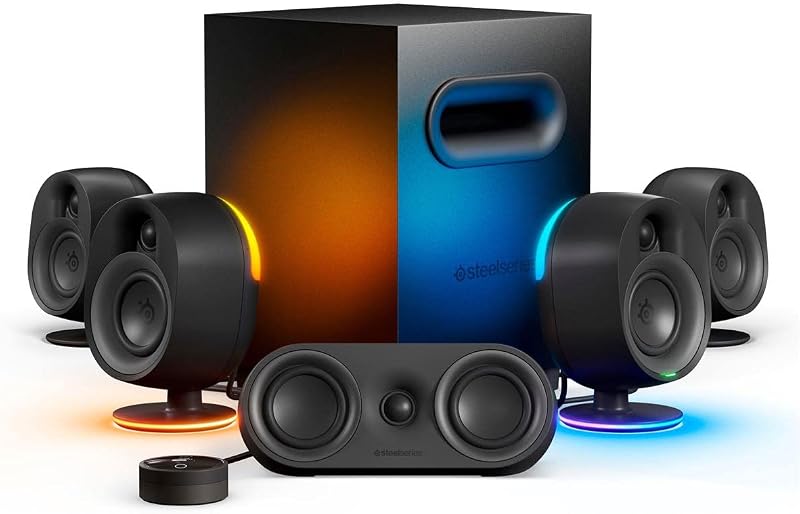
At the pinnacle of the brand’s gaming audio catalog sits the SteelSeries Arena 9 Illuminated 5.1 Desktop system, engineered to deliver authentic five-channel surround sound through a single USB connection on PC. This comprehensive audio setup includes two front satellite speakers, a dedicated center channel speaker that rests beneath a monitor for dialogue clarity, two rear satellite speakers, and a massive 6.5-inch downward-firing subwoofer for powerful low-end bass. Similar to the spatial presentation found in traditional jamo home theater environments, each front and rear satellite employs a two-way design featuring separate silk dome tweeters and organic fiber woofers to ensure crisp spatial imaging across high and midrange frequencies.
Managing messy speaker wires running across walkways is solved on the Arena 9 through wireless rear speakers that communicate wirelessly with the floor-standing subwoofer, eliminating long signal cables crossing the room. Both rear satellite units are wall-mountable, allowing listeners to mount them at ear level directly behind their gaming chair. The front satellites retain the reactive four-zone PrismSync ambient RGB lighting found on the 2.1 system, while overall system management is routed through an included desktop Control Pod. This standalone module features an informative digital display screen that lets users adjust master volume, mute audio, engage 5.1 audio upmixing for standard stereo sources, toggle headset output, configure Bluetooth connections, and tweak lighting modes without interrupting gameplay.
Regarded as the best steelseries arena speakers for sheer spatial awareness, the Arena 9 is purpose-built for gamers who demand true positional audio in competitive shooters, open-world titles, and movies. Having physical steelseries surround sound speakers positioned around the perimeter of the room gives players immediate directional awareness of footsteps and environmental sounds that software simulation cannot match. It represents the ultimate multi-speaker investment in the lineup, making it a showpiece audio setup for dedicated gaming spaces with adequate room for surround placement.
Chip values are fields copied from the Amazon product listing. Scores are out of 10, based on listed specifications and buyer feedback.
Matching a Model to Your Setup
- Small Desks and Dorm Rooms: The SteelSeries Arena 3 fits tight desktop surfaces where under-desk legroom is limited, providing clean stereo sound and tilted audio projection without occupying floor space with a subwoofer box.
- Bass-Heavy Gaming and Media Streaming: The SteelSeries Arena 7 suits gamers and movie watchers who want deep bass and vibrant lighting, utilizing its dedicated 6.5-inch downward-firing subwoofer and two-way satellites to fill medium to large bedrooms.
- Full Positional Surround Sound Without Cable Clutter: The SteelSeries Arena 9 is tailor-made for enthusiast gaming rooms where true rear audio channels are desired without stringing audio signal wires across the floor, thanks to its wireless rear satellites.
- Dual PC and Console Workstations: The SteelSeries Arena 7 and SteelSeries Arena 9 accommodate multi-platform users by offering digital optical and USB connections that allow easy toggling between a computer and a PlayStation console.
- Desk Setups Requiring Centralized Audio Control: The SteelSeries Arena 9 satisfies users who want immediate visual feedback, utilizing its standalone desktop Control Pod screen to manage volume levels, 5.1 upmixing, and lighting modes without opening background software.
Before You Buy
Before purchasing any system in this lineup, buyers should carefully evaluate their physical workspace and connection options. The manufacturer listings note that none of these speaker models are waterproof, meaning they are intended strictly for indoor desktop use away from accidental beverage spills. Furthermore, while the Arena 7 and Arena 9 specify fiber and silk dome enclosure constructions, the product listing for the Arena 3 states that enclosure material information is not available. Physical cable lengths connecting the desktop satellites to the central subwoofer or computer tower are not specified in exact foot measurements on the Amazon listings, so shoppers arranging large desks should plan their layout with reasonable proximity to power outlets and input sources.
It is also essential to recognize platform distinctions regarding audio software. While all three systems function as standard audio output devices across PC, Mac, mobile devices, and gaming consoles via Bluetooth, 3.5 mm auxiliary, or optical inputs where supported, full access to advanced features depends on the SteelSeries Sonar software suite. Capabilities like the 10-band parametric equalizer, acoustic echo cancellation, and simulated spatial audio are Windows PC features. Users connecting primarily to mobile devices or game consoles will experience rich hardware-level sound reproduction, but deep software-driven sound profile customization remains exclusive to a Windows computer environment. Additionally, all models are backed by a limited manufacturer warranty.
FAQ
How does the steelseries arena 3 vs arena 7 comparison break down for everyday listening?
The primary difference lies in bass performance, driver construction, and lighting. The Arena 3 uses a single four-inch full-range driver in each speaker with a front bass port, keeping all hardware on top of the desk. In contrast, the Arena 7 separates audio into dedicated silk dome tweeters and woofers on the desk, while adding an external 6.5-inch floor subwoofer for deep sub-bass reproduction and reactive four-zone RGB lighting.
Can these steelseries pc gaming speakers connect to game consoles and smartphones?
Yes. All three models feature built-in Bluetooth connectivity, allowing wire-free streaming from smartphones, tablets, and compatible handheld devices. For gaming consoles like PlayStation, the Arena 7 and Arena 9 provide optical and USB connections, while the Arena 3 supports standard 3.5 mm auxiliary audio connections from console controllers or display audio output jacks.
What makes the rear satellite speakers on the SteelSeries Arena 9 wireless?
The rear satellite speakers on the Arena 9 receive their audio signal wirelessly from the central subwoofer unit. This design eliminates the need to run long audio cables across the room from the front desk to the back of the seating area. However, the rear speakers still require a physical power connection to operate and can be wall-mounted for clean placement behind the listener.
Which steelseries speakers to buy for someone who frequently switches between speakers and a headset?
All three models include a dedicated wired headset port and front-facing control toggles. The Arena 3 features a multi-function button on the speaker face to switch audio between the speakers and a plugged-in headset, while the Arena 7 provides touch controls, and the Arena 9 offers a dedicated headset toggle button right on its desktop Control Pod screen.
Do steelseries surround sound speakers require special audio software to produce sound?
No special software is required for standard audio playback. The speakers operate right out of the box using standard USB, optical, auxiliary, or Bluetooth connections. However, accessing the manufacturer’s 10-band parametric equalizer, acoustic echo cancellation, and virtual spatial audio tuning tools requires installing the free SteelSeries Sonar software suite on a Windows PC.


